Most Caribbean diving starts the same way. You wake up early, walk to the dock, wait for the dive boat, motor out for twenty minutes, drop in, dive, come back. It is a good system. It works. But Bonaire does it differently, and once you have dived Bonaire you understand why divers come back year after year and almost nobody talks about going anywhere else.
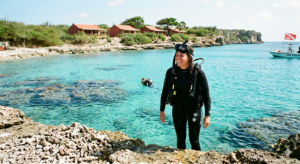
In Bonaire, you walk into the sea from the shore. The reef is right there.
The island sits 80 kilometres north of Venezuela on the southern edge of the Caribbean, in the same ABC island group as Aruba and Curaçao. It is small — about 290 square kilometres — flat, dry and windy, with an interior that looks more like the American southwest than the Caribbean. The coastline is where everything happens. And the coastline is one of the most important marine ecosystems in the region.
Bonaire National Marine Park covers the entire coastline of the island and the small offshore island of Klein Bonaire. It was established in 1979, making it one of the oldest marine protected areas in the world. No anchoring anywhere except in designated spots. No touching the coral. No collecting anything. The rules are strict and the locals take them seriously. The result, after more than forty years of protection, is a reef system that is among the healthiest in the entire Caribbean.
Lac Bay and Sorobon
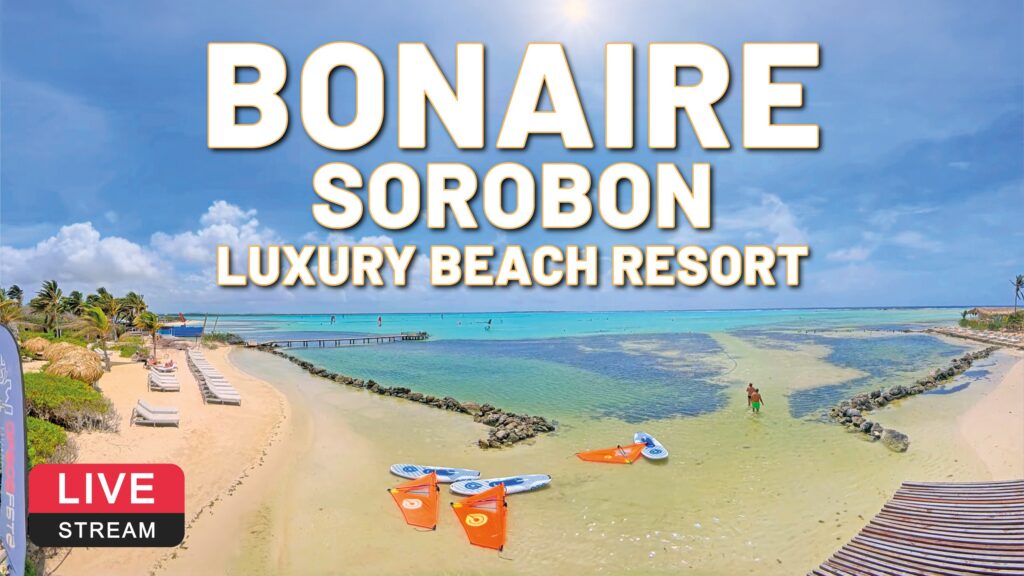
The eastern side of Bonaire is a different world. The trade winds hit the east coast directly and the water there is rough, shallow and wild. But Lac Bay — a large sheltered lagoon on the southeast coast — is protected by the surrounding reef and mangroves. Inside the bay, the water is flat, warm and brilliantly clear.This is where our camera is. The Sorobon Beach cam looks out over Lac Bay, watching the water and the windsurfers who come from across the world to sail here. Lac Bay is consistently rated among the top windsurfing destinations on earth. The trade winds arrive from the east at a steady 15 to 25 knots almost every day of the year. The flat, shallow water is perfect for beginners learning to waterstart and for professionals training high-level tricks. Dunkerbeck Pro Center, run by multiple world champion Bjorn Dunkerbeck, operates directly on Sorobon Beach.
Shore diving
There are more than 80 named dive sites around Bonaire and Klein Bonaire. The vast majority are accessible directly from shore. You rent a truck, strap your tanks in the back, drive to the site marked by a yellow stone on the side of the road, kit up, and walk in. No boat, no schedule, no waiting. You dive when you want, for as long as you want, and you surface when you are done.
The diving ranges from shallow training sites of 5 to 10 metres to dramatic wall dives that drop past 30 metres into deep blue. Visibility is consistently excellent — 20 to 30 metres on most days, sometimes more. The water temperature stays between 26 and 29 degrees year-round. There is almost no current on the leeward west coast where most diving happens, which makes Bonaire accessible to divers of every level.
What you see on those dives is the reason people keep coming back. Healthy hard coral formations. Sea turtles at almost every site. Seahorses, frogfish, flying gurnards, moray eels, eagle rays passing overhead. The reef has not been bleached into submission. The fish are present in numbers that feel startling to anyone used to diving elsewhere in the Caribbean.